AI for Therapeutic Discovery
We are an interdisciplinary research group at Nanyang Technological University, jointly based in the College of Computing and Data Science and the Lee Kong Chian School of Medicine. We integrate artificial intelligence and high-throughput experimental science to discover safer, more effective therapeutics for intractable diseases.
Our Research
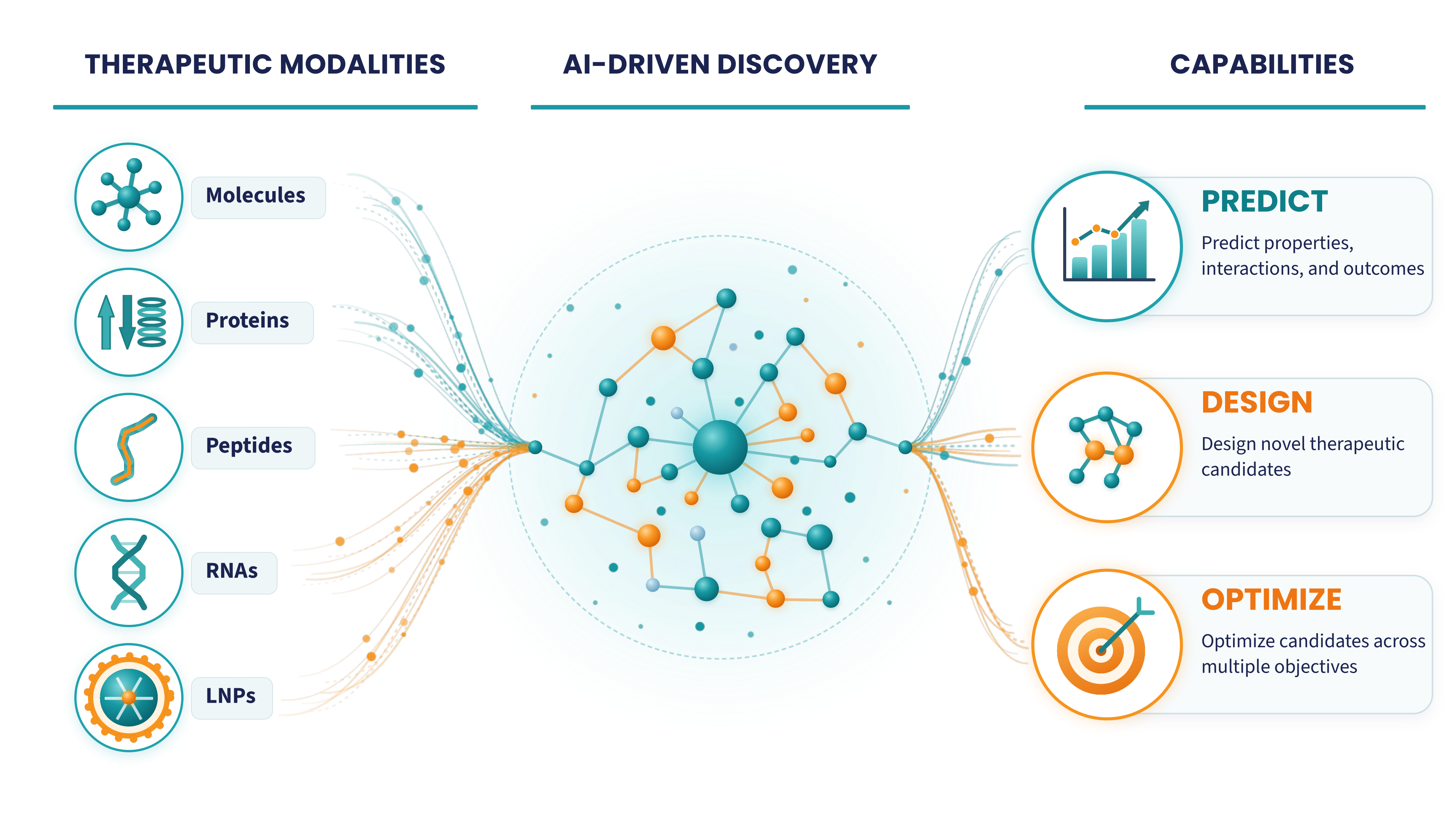
AI-driven therapeutic discovery
Our research covers small molecules, proteins, peptides, RNAs, and LNP formulations. Across these domains, we develop AI methods for three core tasks: predicting properties, interactions, and biological outcomes; designing new therapeutic candidates; and optimizing candidates under multiple objectives.
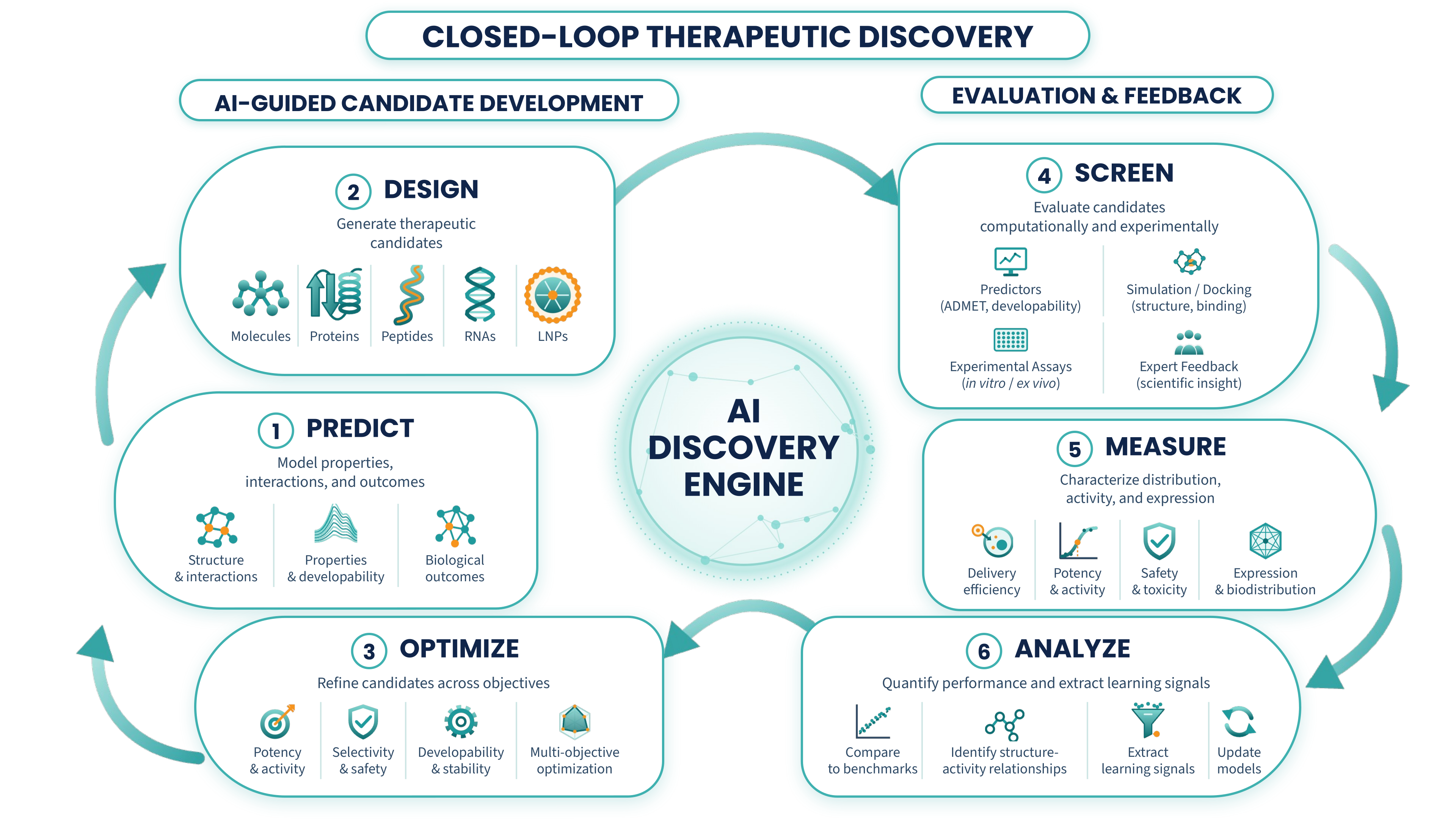
Closed-loop therapeutic discovery
We develop closed-loop discovery systems that connect AI-guided candidate development with computational and experimental evaluation. Predictive models assess candidate properties and outcomes, generative models propose new candidates, and optimization methods refine them across multiple objectives. Candidates are then evaluated through computational screening, simulation, experimental assays, and expert feedback. The resulting measurements and feedback are converted into learning signals that update the models and guide the next round of discovery.
People
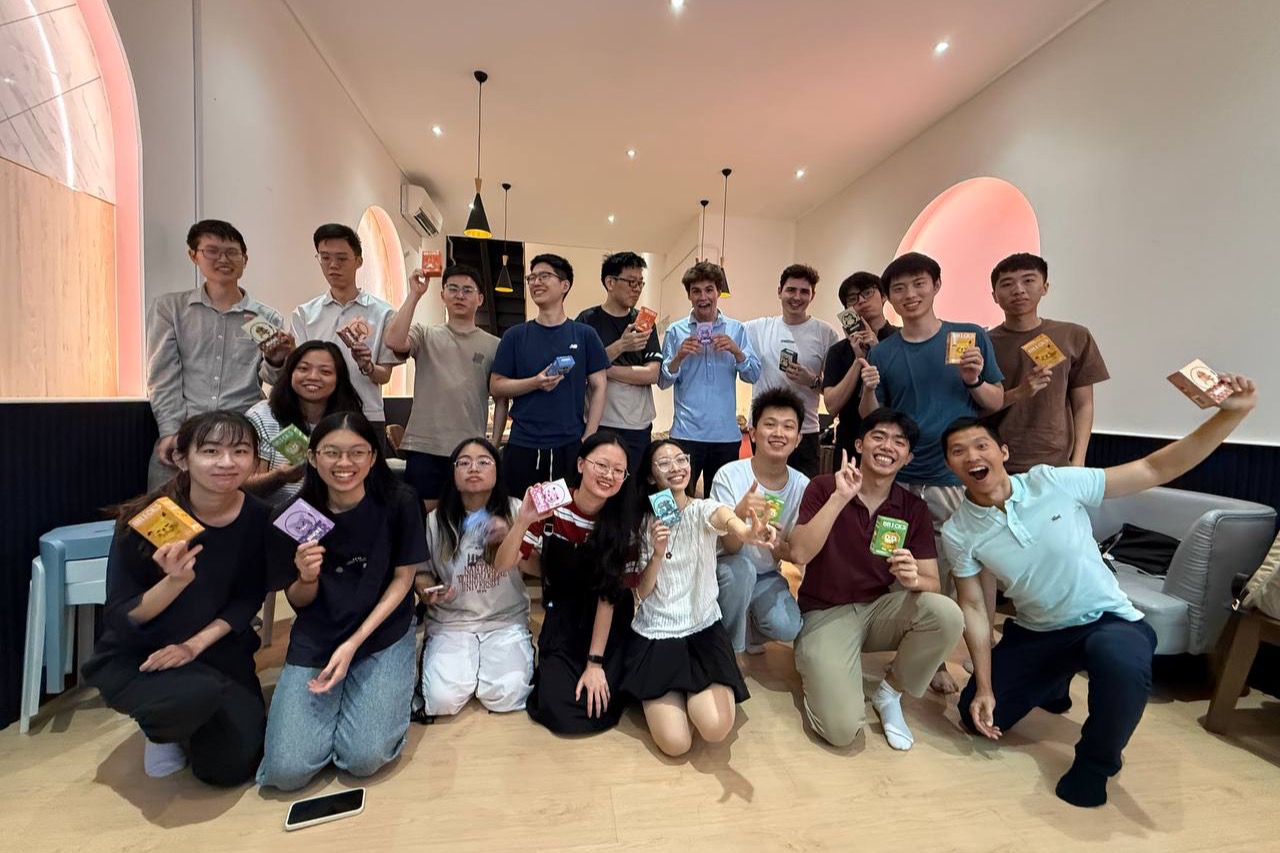
One interdisciplinary lab
Researchers in AI and experimental science work together on shared biomedical problems, connecting model development with experimental evaluation and real therapeutic applications.
Selected Publications